I remember the look on your face when I announced my leave of absence to the class. It still haunts me. You waited until the end, mouth stretched wide, “Are you really leaving?” I explained it was only temporary. You shuffled locks, looked away, “But…I like how you use the earth to tell stories….” you sighed, pulled your lips into a grin again, “I’m glad you’ll be back in January.”
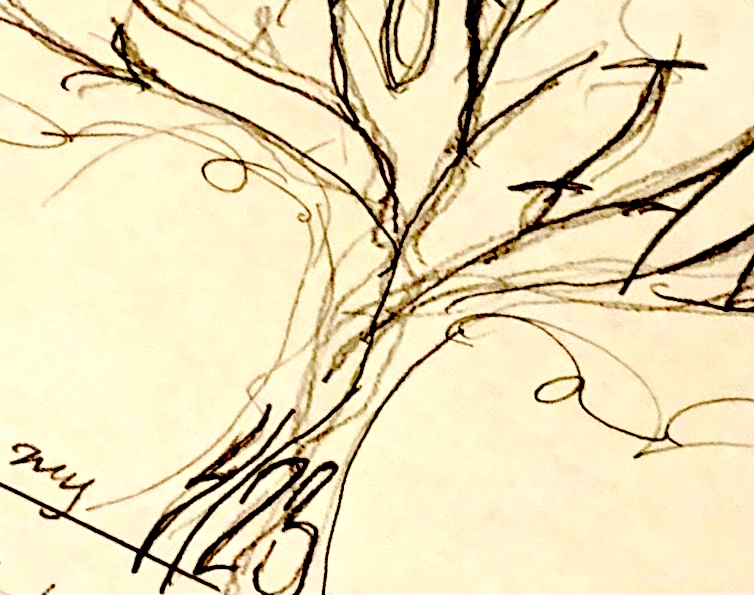
Then you showed me the sketch of a tattoo you drew. An image of a roped, weathered tree. The rough grooves in the drawing, when viewed in full, read the date 4/23. You pointed, “That’s my birthday,” and added, “I recently read The Things They Carried. It inspired me. I asked my English teacher if I could draw a tattoo instead of write the essay.”
“Do you like your English teacher?” I asked.
“Yes, a great deal.” I thought of the new English teacher’s smile, the slight gap between his teeth, his wide-set eyes and perfect nostrils; felt my cheeks heat, almost gushed, I wish your English teacher had a crush on me! I didn’t. Instead, I invited you to tell me about the drawing of the tree. But this part you might not know; I already knew your story. I had your older sibling in class several years ago. She told me. It’s not a happy one.
You’re the only student I personally met in the fall of 2020. School had yet to return to in-person and I was on a leave of absence, but we collided in the hallway. I had entered the building to pack up and turn in my keys. I didn’t recognize you at first; I only knew you through a screen–crowned in headphones and gamer’s throne. It was your voice I knew.
“Woah, you’re like me!”
We have height in common. Maybe you share the same experience, but people treat me like a fraud when I tell them how tall I am. I am always accosted by a stranger at a restaurant, on a train, in line for the bathroom. The conversation always goes the same.
“How tall are you?”
I tell them.
“Do you play basketball?”
“No.”
“Volleyball?”
“No.”
“Any sports?”
“No.”
I’m still waiting for someone to ask if I ever modeled. No one has. The answer’s still no. Usually by this point the inquisitor looks me up and down with distrust and disappointment, so I’ve learned to wave my arms, swivel my hips and sing, “But I dance” (I don’t).
You, however, didn’t interrogate me. After colliding in the hallway, you simply smiled, turned and straightened your back to compare. We pressed our backs against each other, measured our stature. You beat me by an inch. I asked how you liked my substitute teacher. You winked, “Counting the days for your return in January.” I nodded, didn’t reply, grinned.
Height often accompanies athleticism, but my genetics screwed up that equation. Something tells me also have that in common. I earned the nickname, Gumby, in high school because my peers marveled at how someone could fall, trip, bang, break, knock over, run into, apologize, and spring back up with “I’m ok!” as easily as me. I don’t do anything athletic. Okay, that’s kind of a lie. I only attempt athletic activity if I’ve had too much to drink or if I’m angry. Too much to drink? I can’t exactly recall what kind of physical activity I do, but it involves an apology tour the next day. Angry? I’ll attempt a run. Because of residual religious guilt, I rarely get angry. Therefore, I rarely run.
I tried running sad, once. It didn’t work. I fell down a mountain.
High noon on a muggy day, I came chugging down a steep, winding Appalachian road, tears running down my cheek, shoes slapping, lungs burning, and Coldplay moaning in my ears. The sharp decline pivoted around a bend and my feet became incapable of catching up to my knees. I toppled forward. My right knee dug into a disintegrated patch of asphalt, my left took a long swipe at the ground, kind of like sliding into home plate. Or at least I imagine. I don’t know much about football. Or any sport. I do know this happened before my hands braced for the blacktop beating. Only my face came out unscathed.
My knees and palms were skinned stark white, like a newborn baby’s face before the blood rushes in and then out in a scream. I whispered ‘ouch’, and tried to shake the shards of gravel from my skin. I wasn’t seriously injured, but in my sloppy sadness, I managed to totter two miles away from our cabin and no one was around. I looked down; my knees, mealy with grey stones, started to bleed; I’d have to dig the shrapnel out. To avoid being splayed out on a deserted Appalachian road, I hobbled down a few more meters to a clearing in the trees.
Two looming white oaks, standing guard, revealed a small worn path between. I limped through the passage, pushing supple whip-like branches out of the way. Not too far ahead, a bird heralded my arrival, and I followed her call up the mountain where, years ago, mighty water had carved a ravine through the rocks. But time since diminished it into a small forgotten stream falling out of a key-shaped hole in the mountain. Along the slopes, moss and vines, like medals of war, hung from the branches poised at the ready, and the Shenandoah soil; wet, earthy, whispered of ghosts in the leaves. I ran my fingers along the bark of a hollow log, soft with decay. The canopy of elms, the July humidity, and distant fireworks echoing through hollers like cannon-fire began to suffocate me.
I crouched next to the tiny waterfall and removed my socks and shoes. The blood from my knees forged its own path down my legs, red streams, running over my feet to my toes, which I dipped under the trickle. I watched my blood run its course and then mix with the water, dissipate, disappear. Carried away on the backs of pebbles to somewhere unseen. In the silence between violent pops of fireworks, the forest seemed to press her palms together around me. The animals rested eerily. No bird moved, no leaf quaked. My eyes, still raw from the morning, looked up to the sky. The trees, like soldiers, kneeled in mourning over me.
How’s that saying go? The one when you’re alone in the forest. The one about the sound of a tree? Well, what happens when it’s a scream? On that mountain I looked at my knees, cracked, bleeding and realized nobody is going to hear me. And then released from within, a howl I didn’t recognize. From my lungs, an animalistic, wounded wailing. Because earlier that day, on a blue mountain peak, I scattered the ashes of my baby.
****
People sometimes treat me like a fraud when I tell them I’m a science teacher. I get two reactions. The first usually happens at a party, and it comes from non-science people. I am aware we carry the stereotype of being stiff and boring, so I shock most when our conversation happens at a keg stand, and I’m the one upside down. The second reaction happens at a party as well, but it comes from real science people. Once they learn what I do, I’m cornered into the kitchen and served their college dissertation about ion cyclotron emissions in fusion plasmas. They never seem to notice me glancing over their shoulder, eyeing up the lampshade…and coffee table. Once they catch on that I nod in eager agreement to any numerical calculation, no matter how inaccurate, they step back and squint. That’s when I get the question:
“Why did YOU become a science teacher?”
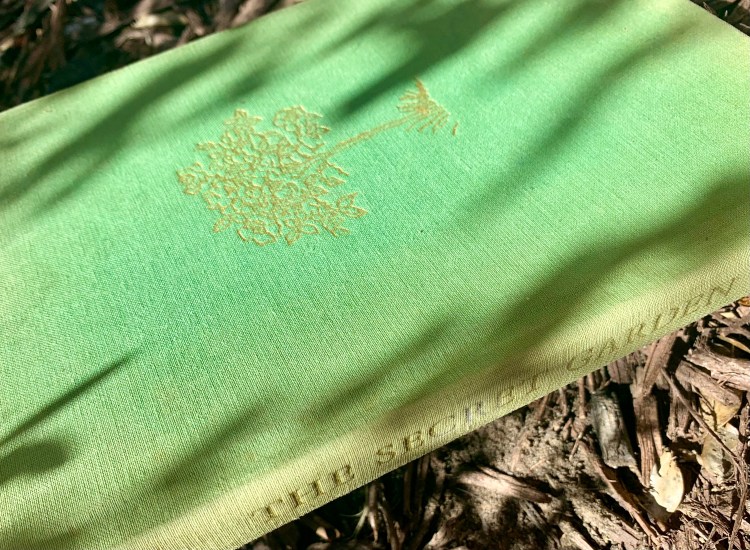
I became a science teacher because of the novel The Secret Garden. I loved the mystery of how nature could turn an ugly, skinny little girl into something beautiful. How a robin guided her to a secret place to heal. And the best part, she invited others into the garden to do the same. Even the saucy invalid everyone else shoved into a closet. My book, as a little girl, had a simple tree on the cover, engraved in gold. Inside, elaborate pencil illustrations of crocuses, snowdrops, lilies of the valley, and canterbury bells, filled the pages. And then there was the English moor. I dreamed in the pages of that wild, moody moor. I read them on repeat. Every time I read it, I was Mary on the Moor. Wind whipped and rain slapped. Digging into soil with the gorgeous peasant boy, whispering to animals, reviving dead roses. Oddly enough, though, my literary crush was on the sick boy back at the mansion. The one who laid in bed howling and barking orders all day.
I shared all this when people asked, “why did you become a science teacher”? but I never enjoyed the faces of confusion that followed, so I learned to say something entirely different. Now, when asked at a party why I teach science, I wave my fingers in front of my eyes and whisper, “because science is art.” No one understands art, and no one will admit it. It ends the conversation right there.
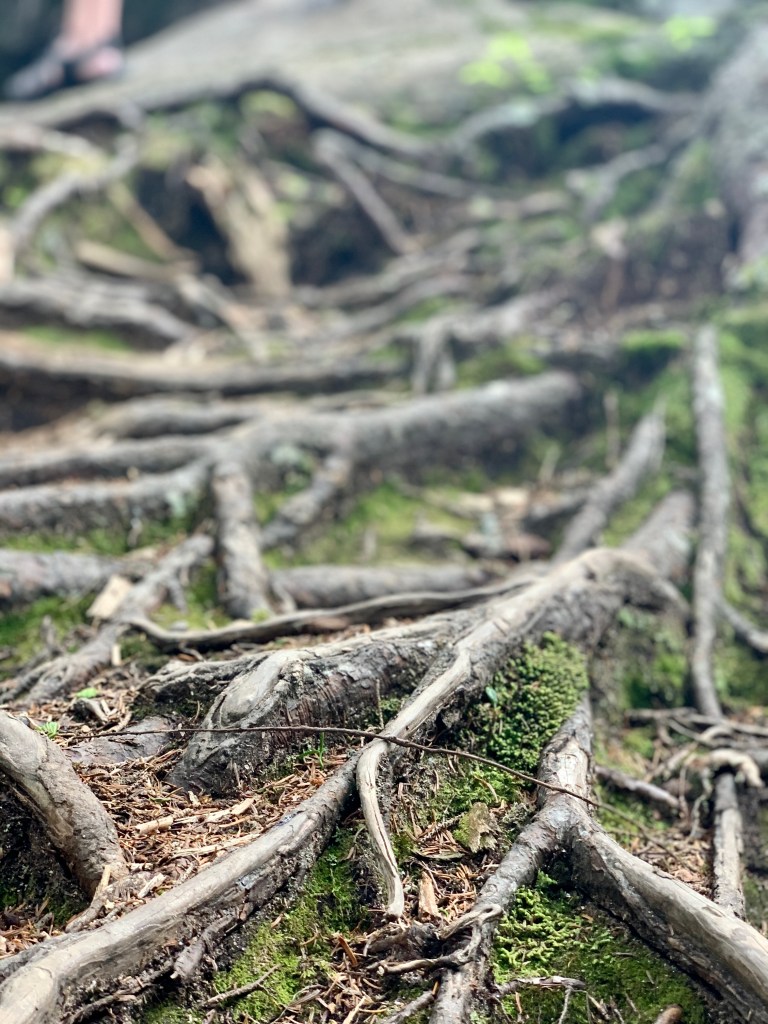
But science is art, and I see it in the way nature tells stories. The rings of a tree, like ridges in the horns of sheep, reveal years of history. The layers of rocks spelled out in a canyon wall, chapter by chapter, share the earth’s memories. Under your feet, insects, fungi, and microcosms work together to create a symbiotic symphony. Drama explodes as growth and decay fight like comfortable lovers on a shrouded fallen tree. Take a diamond, for example, forged under tremendous weight, pushed to the absolute physical limits, pressed into something that eventually becomes beautiful, raw, and real.
On the day I measured against you in the hallway, I didn’t tell you it was no longer a leave. I didn’t tell you my husband sat me down at a table and said we’re moving. When you said, “We can’t wait for your return in January,” I grinned thin. Said nothing. You see, I thought I’d retire at that school teaching science. I loved that job. I never, ever wanted to leave. I wasn’t ready. I couldn’t speak the truth. I allowed you to believe I’d return to the classroom.
****
I know what it feels like to be hurt by someone you trust. I had a beautiful, wild friend once. She wore yellow flowers in her long, black braided hair and I felt safe with her. So I invited her to come to Appalachia, to bring our daughters to a secret mountain. We drove silently through the night, hair blowing in front of our daughters’ sleeping faces. My friend did not know the story about my son.
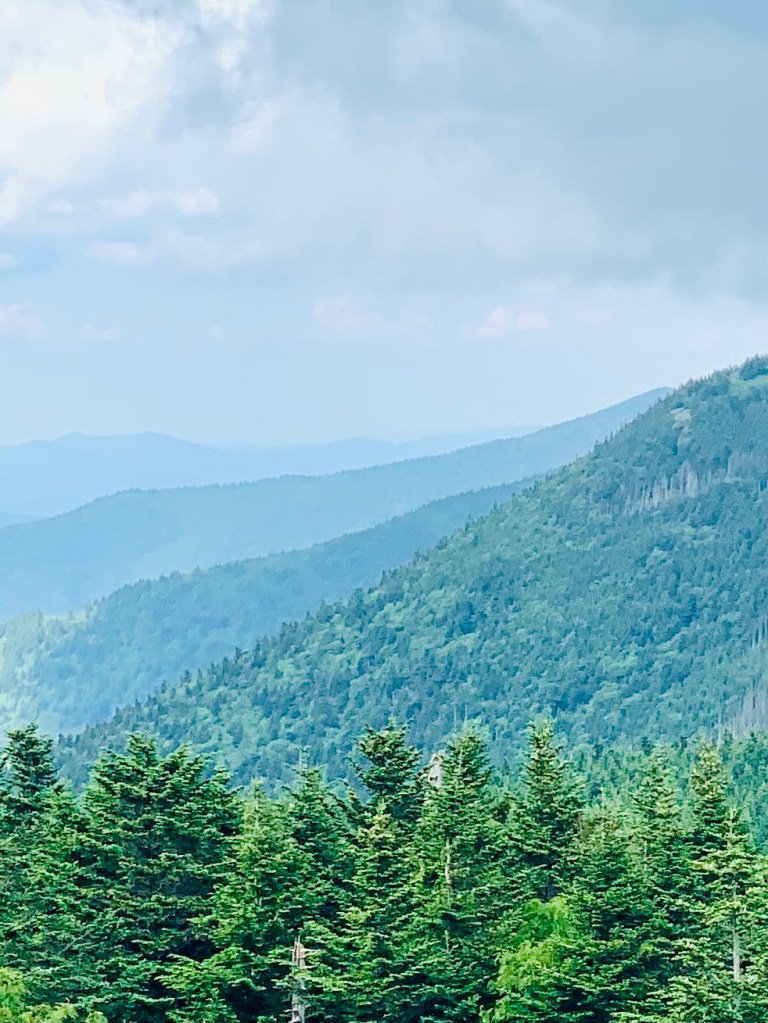
On a clear, sunny Sunday, halfway up a smokey blue slope, we spread blankets. The purple hydrangeas, late to bloom, buoyed in the mountain and the sun shone without competition through layers of blue folding peak over peak. Far off, a river picked up the sun’s beam and carried it down a mountainside like an illuminated wound. Light fell through the leaves of the tree we sat under, and, like sparklers, decorated the creek water at our feet. The sun’s reflection in our daughters’ hair merged with the reflection of the pebbles in the stream they crouched near. We lounged and listened to the girls’ earnest debate over a dead fish. It was an intense discussion filled with burials, tombs, life-insurance, fish relatives from out of town. Our daughters struggled to agree, yet we let them be.
“I have the solution!” my daughter cried. And then held the fish up to the tune of the Lion King. “We put the fish on a leaf so he floats down the stream to Heaven’s beam over there. The beam sucks him up like a spaceship, and he comes back to life. It’s easy!” Our daughters, silhouetted by the stream, nodded agreement and then silently kneeled, shoulders slumped, over the fish’s dead body. They set the fish atop a leaf, turned around and said gravely, “We set him free.”
Soon after, our girls began to venture in opposite directions down the creek to mine for gems, so we stretched our limbs and called them back to land. My friend squinted and asked if I wanted to hike the rest of the way to the top of the mountain.
“No. Not today if that’s ok.”
I wasn’t ready. I didn’t tell her what happened years prior on that disastrous run, or about my skinned knees. I didn’t tell her how whips of ashes flew from that blue Appalachian peak, or how I howled an unheard scream. Until that day, I had never returned to that smokey mountaintop, though I made a promise to. I didn’t tell my black-braided friend any of these things. But I did something I don’t often do. I told her how my son died as a baby.
“That’s all I can talk about right now. It’s too close to home,” I choked. My mountain friend nodded, grabbed my hand, and we descended. At least that time she wasn’t mad.
But on the eve of our moving truck, it felt different. My friend came to say good-bye, but then brought up the school closings due to the pandemic. She started jabbing her finger and screaming about injustice in my kitchen. I pressed my palms onto the counter.
“Please. Stop.” I whispered.
Only three days prior, I had packed up my classroom. Turned in my keys.
“It’s all your fault,” she jabbed and spit.
“Please don’t go there.” I begged. “This is too close for me!” I raised my palms in front of my face. She ignored the injury.
“You fucking teachers. I wish you cared about students.”
You might not know this, but the day after I announced my leave of absence, your mom emailed me. She said your grades were important. Said you didn’t do well the last time someone left you. Said she was disappointed in me. Said you would be, too. I already knew that because I saw your face the day I promised to return in January.
It haunts my memories.
I didn’t know weeks later I would write a letter of resignation for the job I never wanted to leave. I didn’t know we would pack up a van and move. Afterwards, I couldn’t face my students. I couldn’t return and announce, “This is it, class. It’s not a temporary leave of absence. Good-bye. It’s permanent.” Instead, I went dark. Silent. I just…dissipated.
When we collided in the hallway you said, “I’m glad you’ll be back in January.” I looked you in the eyes and grinned. I stood before you, face-to-face, and said nothing.
You told me, “Come back to tell more stories.”
But I didn’t come back.
This is the grief I carry.
love
your teacher
PS. Please share my letter. This could be for your child’s classmate.

